

Troozer.com Review: What Is It, How Does It Work, and Should You Use It?
If you searched for Troozer.com, you may have noticed something unusual: different websites describe it in completely different ways.
Some pages call Troozer a digital publishing website. Others describe it as an online marketplace, productivity platform, AI service, or general-purpose web tool. That made me curious, so I looked at the information available around the domain and compared those descriptions with what can actually be verified.
The clearest picture I found is much simpler.
Troozer.com currently appears to function primarily as a multi-category digital publishing website, with articles covering subjects such as technology, business, finance, health, education, travel, lifestyle, and other general-interest topics. Public descriptions of the current site also identify it as a digital media publishing platform.
That distinction matters because someone searching for Troozer may arrive expecting a shopping website or software platform and become confused when they see an article-based website instead.
So, what exactly is Troozer.com, how should you use it, and what should you check before trusting information found there? Here is what I found.
What Is Troozer.com?
Troozer.com is best understood as a general digital media and publishing website.
Rather than being built around one narrow subject, the site covers multiple categories. Public information about the website lists areas including technology, business, finance, education, health, travel, lifestyle, and other topics. Its structure resembles a blog or online magazine, with articles presented by category and individual posts carrying information such as publication dates and authors.
This is probably the easiest way to think about Troozer:
It is a website for browsing and reading online content rather than a single-purpose app.
That may sound obvious, but it clears up much of the confusion surrounding the domain.
Several third-party articles currently use very different descriptions of Troozer.com. Some describe it as an e-commerce marketplace or productivity service, while others discuss AI tools or a digital workspace. Those descriptions do not consistently match the current public presentation of the domain.
For that reason, I would not rely on a random article’s description of Troozer without checking the actual website.
My First Impression of Troozer.com
When evaluating an unfamiliar website, I normally start with a simple question:
What does the site actually do when I visit it?
That is more useful than reading ten promotional articles first.
In Troozer’s case, the publicly visible structure points toward an article-based publication. Categories and posts are the important parts of the experience, rather than a conventional shopping cart, desktop application, or complex SaaS dashboard.
That immediately changed how I looked at the site.
If I were visiting Troozer to research a topic, I would treat it in much the same way I would treat another general-interest publication: find the relevant article, check who wrote it, look at its publication date, and verify important claims against stronger primary sources.
This is particularly important for subjects such as health, finance, law, and technology. A general article can be a useful starting point, but it should not automatically become the final authority for an important decision.
What Can You Find on Troozer?
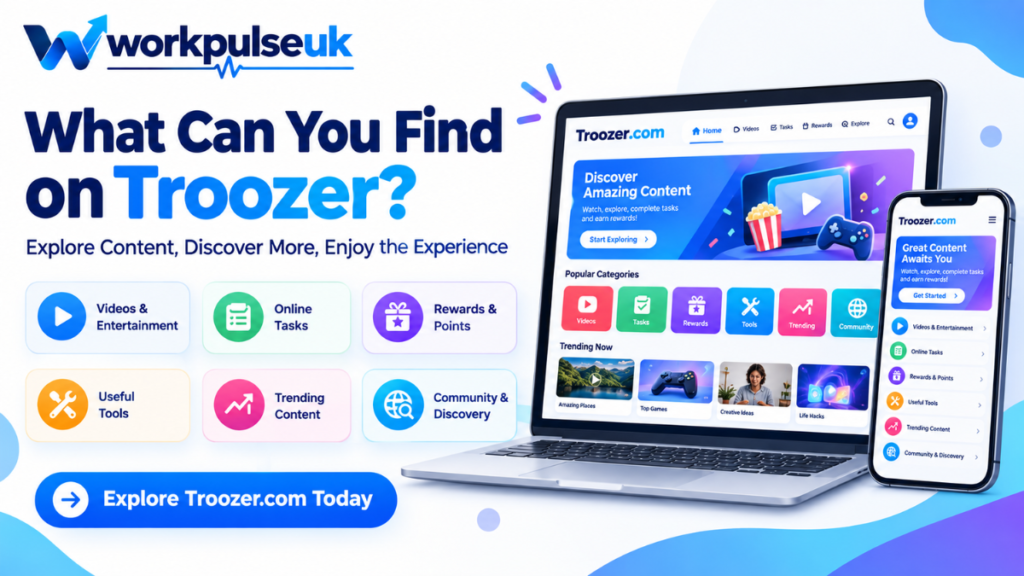
One of the interesting things about Troozer is the range of subjects.
Instead of concentrating entirely on technology, for example, the site covers several broad categories.
Depending on the site’s current publishing activity, visitors may encounter content related to:
- Technology
- Business
- Finance
- Education
- Health
- Travel
- Lifestyle
- Sports
- Law
- Automotive
- Real estate
Public descriptions of the website show a similarly broad category structure.
This approach can be useful when you are simply browsing for information. The downside is that a broad publication needs particularly strong editorial standards because the accuracy requirements are different for every subject.
An article about a smartphone feature and an article about personal finance should not be treated as having the same level of risk.
How I Would Use Troozer.com
If you are new to the website, there is no complicated setup required simply to read its public content.
Here is the practical process I would follow.
Step 1: Start with the exact domain
Make sure you are visiting troozer.com, not a similarly named website.
This sounds like a minor detail, but it matters. Search engines contain many pages discussing Troozer, and some of those pages describe the service differently.
The domain itself has a long registration history according to public domain information, although domain age alone does not prove the quality or reliability of a website. Current public WHOIS-related information lists March 15, 2013 as the registration date.
Step 2: Look at the categories
If you are looking for information about technology, for example, go directly to the relevant category instead of relying on a third-party article explaining what Troozer supposedly does.
The same applies to business, finance, travel, education, or other subjects.
Step 3: Open the complete article
Do not judge an article from its headline alone.
I recommend checking:
- The author’s name
- Publication date
- Last updated date, if available
- Sources or references
- Whether the article makes factual claims
- Whether those claims can be confirmed elsewhere
This takes another minute or two but can save you from relying on outdated information.
Step 4: Verify important information
This is the step I consider most important.
Suppose you find an article about a new Android feature. You could check Google’s official Android documentation or the phone manufacturer’s website.
If an article discusses a financial regulation, check the relevant government or regulatory source.
For health information, use recognized medical or government sources and speak with a qualified professional when the decision is important.
Troozer can be the place where you discover information, but discovery and verification are not the same thing.
A Realistic Example
Imagine you are researching whether a particular laptop is suitable for university work.
You find a Troozer article discussing laptops and read through its recommendations.
Instead of immediately purchasing a machine, I would use the article as a starting point.
I would then open the manufacturer’s official product page and check:
- Processor model
- RAM
- Storage
- Display specifications
- Battery information
- Warranty
- Current price
I would also check recent customer reviews from established retailers.
This approach works because it separates general guidance from purchase-critical information.
The same method applies to almost any broad information website.
Is Troozer.com an Online Store?
This is where some of the confusion around the domain becomes important.
I found third-party articles describing Troozer as an online marketplace or shopping platform.
However, other recent assessments of the currently visible website describe it as a multi-category digital publication rather than an online store.
Because these descriptions conflict, I would not assume that Troozer.com is an e-commerce marketplace simply because another website says it is.
If you are considering buying something, check the actual domain carefully. Look for a genuine product listing, seller information, checkout process, refund terms, delivery information, and customer-support details.
Never send money merely because an unrelated article says a website is a marketplace.
Is Troozer.com Safe?
There are two different questions here:
Is the website technically safe to visit?
And:
Can every piece of information on it be trusted?
Those are not the same question.
Some public sources report standard website security measures such as HTTPS, and there is no need to assume that a website is malicious simply because its ownership or business information is not immediately obvious.
At the same time, several recent independent articles point out that publicly available information about Troozer’s ownership, business identity, and exact purpose is limited or inconsistent.
For me, that means a sensible approach is better than either extreme.
I would be comfortable reading publicly available articles, but I would be more careful before providing sensitive personal information, downloading unknown files, installing software, or making a significant payment.
That is good practice for unfamiliar websites in general.
Things I Would Avoid Doing
There are a few mistakes that are easy to make when researching an unfamiliar website.
Mistake 1: Believing the first Google result
A search result is not automatically an endorsement.
Search engines can return articles written by people who have never actually used the service they are describing.
Troozer is a good example because current online descriptions are surprisingly inconsistent.
Mistake 2: Assuming domain age proves legitimacy
Troozer’s domain information indicates a registration date going back to 2013.
That is interesting background information, but it does not prove that every current page is reliable.
A domain can change ownership, purpose, design, or content over time.
Mistake 3: Sharing unnecessary personal information
If you only want to read an article, there is normally no reason to provide highly sensitive information.
I would avoid entering passwords, banking information, identity documents, or other sensitive data unless there is a clear reason, a legitimate service relationship, and enough information to establish who operates the service.
Mistake 4: Treating general articles as professional advice
This is especially important for finance, medicine, law, and other high-stakes subjects.
An article can help you understand a topic without being sufficient for making an important personal decision.
Troozer.com on a Phone
One practical advantage of a web-based publication is that you do not necessarily need a dedicated application just to read its content.
A normal modern browser such as:
- Google Chrome
- Safari
- Microsoft Edge
- Firefox
should be the natural starting point for accessing a website like this.
On Android, I would use Chrome or another trusted browser. On an iPhone or iPad, Safari is perfectly adequate.
If a page tells you that you must install an unrelated application merely to read a normal article, I would stop and investigate before proceeding.
What About the Conflicting Reviews?
This is probably the most interesting part of researching Troozer.com.
During my research, I came across descriptions that were difficult to reconcile.
One article described Troozer as a multi-category digital publication. Another discussed it as a browser-based utility platform. Other articles described marketplace or productivity features.
That does not automatically mean one particular writer is deliberately misleading readers. Websites change, domains can be repurposed, and third-party writers sometimes misunderstand a service.
But it does create a practical lesson:
Check the source closest to the actual website.
If you want to know what Troozer does today, the current website matters more than an old article describing what it supposedly did several years ago.
Who Might Find Troozer Useful?
Troozer may be useful for readers who enjoy browsing general-interest articles and want information across several categories rather than visiting a specialist publication for every topic.
For example, someone researching a technology topic might discover a business-related article while browsing another category.
It can also serve as a starting point for people who are unfamiliar with a subject and want a straightforward introduction before moving on to more specialized sources.
However, I would not make Troozer my only source for information that could affect my money, health, legal position, privacy, or security.
That is not a criticism unique to Troozer. It is simply a sensible rule for general online publishing.
A Simple Trust Checklist for Any Troozer Article
Before relying on something you read, run through this quick checklist:
1. Who wrote it?
Is there a named author?
2. When was it published?
Technology and financial information can become outdated surprisingly quickly.
3. Does it cite evidence?
Look for original documents, official sources, research, or direct statements.
4. Can the key claim be verified?
Search for the same information on a primary source.
5. Is the topic high-stakes?
If it involves health, money, law, or security, use additional sources.
6. Is the article trying to sell something?
Understand whether the writer may have a commercial relationship with a product or service.
This checklist takes very little time once you get used to it.
Final Thoughts on Troozer.com
After looking through the available information, the simplest description of Troozer.com is a broad digital publishing website rather than a clearly defined shopping, AI, or productivity platform.
The biggest challenge for someone researching the domain is not necessarily the website itself; it is the amount of conflicting information surrounding its name.
That is why I would approach Troozer in a straightforward way. Use it as an information source, read the articles that are relevant to you, check dates and authors, and verify important claims against primary or specialist sources.
If you are simply looking for something interesting to read, that approach is fairly easy.
If you are about to spend money, share sensitive information, or make an important personal decision based on something you found there, slow down and do a little more checking.
That habit is useful with Troozer.com, but it is even more useful across the wider internet.